Thursday, November 30, 2006

Sampling history in the movies

Desson Thomson has a great piece in today's Washington Post about the way recent movies seamlessly blend historical footage into their stories. It was a bit of a stunt in "Zelig," "Forrest Gump," and "Dead Men Wear Plaid," but in movies like "Bobby," "The Good German," and "The Queen," it enhances the way that the fictional characters respond to real-life events. Thomson compares it to sampling classic riffs in a hip-hop song.

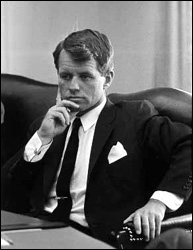
As we watch the candidate deliver his ill-fated victory speech -- moments before his assassination -- the interplay between real footage, our knowledge of what's to come and the dramatic reactions of actors such as Hopkins and William H. Macy make us believe we've witnessed Kennedy ourselves. The emotional jolt we're feeling in that moment is a response to something that happened almost 40 years ago.


How much better this is than watching actors -- no matter how assured -- replaying famous people of the past. In Oliver Stone's 1995 "Nixon," Hopkins can never really make us feel we are in the presence of the former president. And try as he might, Bruce Greenwood in the 2000 Cuban missile crisis picture "Thirteen Days" can never evoke President Kennedy the way actual images can. Playing real life people is so analog. In this digital age, why not roll out the real McCoys? This way, great figures of history can walk among us again.

The cross-pollination of images is such a regular part of our Internet-savvy lives -- right now, with just a few Google clicks, you could watch Vice President Cheney spit out Al Pacino's profanity-laced speech from "Scarface." Despite the questionable taste of showing a real president being killed in "Death of a President," it's gratifying to see filmmakers find greater purpose -- and thoughtful artistry -- in our ever-growing backlog of history. Not only can this development underscore movies as a viable pop-cultural force during a time of changing technology, it gives younger generations a living, breathing link to what might otherwise seem a dusty past.

Interview with "Joseph" -- Oscar Isaac

Oscar Isaac plays Joseph in the respectful new retelling of "The Nativity Story," opposite "Whale Rider's" Oscar-nominated Keisha Castle-Hughes as Mary. Isaac is a 2005 graduate of Julliard with an impressively wide range of performances already. He plays a Russian gangster in the forthcoming "PU-239" and will be in Stephen Soderbergh's "Guerilla" and has appeared on "Law and Order," a musical version of "Two Gentlemen of Verona," and in the title role of "Macbeth."

He spoke to me about appearing as a man everyone knows, but no one knows well: Joseph, husband of Mary, the mother of Jesus, and the man who brought her to Bethlehem. We spoke on November 8, 2006, in the Ritz Carlton Hotel in Washington DC.

You had a very international cast and crew. How was that a help and were there any ways it made the project more challenging? We agreed we would have one united "middle eastern-ish" accent for all of us. It was a lot of fun because I was the only American in the cast, so the others were constantly berating me with questions.

You were working opposite a very talented actress, but someone who was very young and did not have the benefit of your level of training. How did you find a way to work together? She's so naturally gifted, she is so natural, such a deep soul, so in touch with that, that it was easy to work with her. She had to ride a donkey for eight hours at a time with heavy robes and the fake plastic belly, and she always had a great sense of humor about it. I tend to be very serious and deep into the character. She's remarkable, she has an old soul, very present for the performance but ready to laugh as soon as it's done.

Director Catherine Hardwicke has shown as a director a real feeling for the point of view of teenagers. How was that a factor in telling this story? I found out she was the director, I said "Really, that's an interesting choice," but I realized it is completely logical because she's always done stories about adolescents going through intense periods and these are the most famous adolescents in history going through the most intense experience in history. She is great at cutting through stuff and getting to the heart of it, she'd take Keisha off to the side and when she came back she'd be more intense and focused. Catherine relates very well to adolescents and their perspective on what is happening to them.

How was your classical training helpful in developing this character? Did you focus more on research or on motivation? Both. I do a mixture of inside-out and outside-in when I prepare for a role. In this case, the hands were very important to me. I thought about Joseph -- he lives in the first century. The Jewish people at that time identified with two things most, the faith and their ties to the land. The key is in the hands. The script talks about his calloused hands. I worked with a technical advisor for a month with authentic tools of the period. I made the staff, the olive press, the walls of the house and I got the real calluses, making him a flesh and blood person, not a walking icon.

How do you take a character who is in some ways so well known and in others so little known and make him both a distinctive character and an archetype? Joseph is going to be an archetype; the work has been done for you. But he is human. It's not that he doesn't feel fear, jealousy, betrayal, and doubt. The one word that describes him in the Bible is "righteous." His actions are righteous. Courage is not being fearless but working through the fear. Joseph decided not to stone Mary or divorce her publicly, even though that was his right and that was the law. Being righteous in that case does not mean following the law; it means love and humility and faith. He's in love with Mary and he believes in her. Where does it come from -- that selfless, humble, love? The most amazing act of humility is the essence of the story, how God made himself flesh in the most humble of ways with the most humble people. Jesus was not born to kings or to wealthy people but to Mary and Joseph, poor but righteous.


How did the setting help you understand the characters? When we were filming the scene out in the wilderness, when we were traveling to Bethlehem, starving, down to the last piece of bread, and I feel my bread to the camel -- I wish there had been a camera behind me so people could see what I was seeing, the sun was setting, the moon rising at the same time. It was so stirring. For Joseph in that scene, the sign he asks for doesn't come, but for me, for Oscar, the sign was there.

Who are some of your influences? What were the performances that led you to want to become an actor? Pacino in Dog Day Afternoon. For any film I do, I watch it. I watch it once a month for homework; it taught me as much as Julliard did. I love Midnight Cowboy, Taxi Driver, incredible performances. I want to add to the medium the way they do. I loved Ryan Gosling in Half Nelson-- so egoless, so into it, so all about the craft, Daniel Day Lewis in anything, a kind of inarticulation.

How does this movie appeal to believers who will want to see their own vision of the story and those who are not as familiar and approach it as a narrative rather than as worship? It doesn't follow one gospel. It incorporates a fuller, dramatic vision. For both believers and those who come for the story, the message of humility and love is an important reminder that it's not about bombast and pride. God he has brought down the rich and exalted the humble and the poor. It is a huge epic adventure with this little intimate love story about these two people, and how they really become a family. This is a story of the Jewish people, we have to let people understand that, so it was critical to get the customs right, get the words right, get the prayers right. That's why the message is so great; it is about humility and exalting the humble and those that react in love.

Monday, November 27, 2006

The Cockeyed Caravan of Preston Sturges

There's a lot to be said for making people laugh. Did you know that that's all some people have? It isn't much, but it's better than nothing in this cockeyed caravan.
I am delighted that the inimitable films of Preston Sturges are now available on DVD, many of them for the first time. My favorites, The Lady Eve and Sullivan's Travels, already have beautiful Criterion Collection editions. But this new set includes "Christmas in July" (a store clerk thinks his coffee slogan has won a big contest and begins spending the prize money), "The Great McGinty" (a bum becomes a politician), and "Hail the Conquering Hero" (a mild-mannered soldier is mistaken for a war hero). And then there's "The Miracle of Morgan's Creek," a movie that has possibly the most outlandish plot in movie history and a fabulously dry performance by Diana Lynn.


There's a fine salute to Sturges in Slate and much that is insightful and amusing has been written about him elsewhere. But this new release lets us appreciate him for ourselves. I envy those who will take this chance to discover him.

Wednesday, November 22, 2006

A rotten tomato for Stokes and Dove

I love being a critic and I love reading reviews by other critics, whether I agree with them or not. I accept and appreciate a wide range of perspectives and judgments. But some "critics" are as cynical and synthetic as the multiplex fodder they urge everyone to see, with positive reviews peppered with a glowing quote to be used in ads. And it infuriates me when someone purporting to advise parents on what is appropriate for children overlooks offensive material.

Janet Stokes of the Film Advisory Board, which appears to be a one-person operation, is quoted in the current ads for the hideously inappropriate Deck the Halls, calling it a "Christmas treasure." The Dove Foundation does not recommend the film, fretting over its use of "Jesus" as an expletive, a bet, and some clevage.

Neither one seems to find it relevant that it is a PG movie with grossly offensive homophobic humor: it is supposed to be funny that a cross-dressing man's lacy underwear is visible under his clothes, that a man meets his wife because he is a peeping tom and a young boy enjoys peeping at teenage girls, that men in a sleeping bag are naked for warmth, that men ogle pretty dancing girls ("Who's your daddy!") only to find they are their daughters ("Oh no! I'm your daddy!") so they race off to splash holy water in their eyes to purify themselves. The movie has humor about young teenagers dating sailors and faking IDs, a joke about a man exposing himself, and a reference to a stripper pole in the bedroom. The film is appalling and disgusting. And it is genuinely shocking that anyone who evaluates films for their suitability for children would fail to recognize that.

For My Consideration

I love getting all those wonderful "for your consideration" DVDs at this time of year, and I even enjoy the speculation about who will win the Oscars. But it seems to me that the acting awards are pretty much a done deal already: Helen Mirren and Forest Whitaker are so far out in front I don't think anyone will come close (Annette Benning's performance was sensational in "Running With Scissors," but no one went to see it; everyone wants to see Peter O'Toole, the multi-nominated, never awarded guy win, but best actor awards don't go to old guys). For me, the races to close to call this year are documentary and animated film. This has been a spectacular year in both categories, maybe the best ever.

Quote of the Week

It's always a challenge to come up with new Christmas metaphors to describe horrible new holiday movies like the excruciating "Deck the Halls," this year's "Christmas with the Kranks." Coal in the stocking is popular. Fruitcake always works. But I like these:

Like a fatally snarled string of Christmas lights, "Deck the Halls" promises holiday cheer but delivers only frustration. Sam Adams, Los Angeles Times


Like garish snowflake sweaters, Christmas movies are a regrettable, disposable part of the season. This one is worse than most. How bad? So bad that it makes “The Santa Clause 3” look like ... well, “The Santa Clause 2.”A.O. Scott, New York Times


One of those dreadful, pandering, seasonal pictures that sneaks into theaters, Grinch-like, and makes off with tons of cash each year.
Josh Larsen, Sun Publications (Chicago)

Tuesday, November 21, 2006

The Transported Man?


Perhaps it's just "The Prestige" that has me thinking again about a question I've had in the past. Has anyone ever seen Jeremy Sisto and Timothy Olyphant in the same room?


And what about Dylan Baker and Bruce Greenwood?

Talk amongst yourselves.

Sunday, November 12, 2006

It's Not the End of the World (Super Furry Animals)

This video from Partizan Lab is a filled with superbly intricate design work.

Friday, November 10, 2006

Interview with Jeremy Brock

Listen on my delightful conversation with the screenwriter-director of "Driving Lessons," who also wrote "The Last King of Scotland" and "Mrs. Brown."

Behind the scenes with Borat

Sasha Baron Cohen doesn't break character to talk about Borat or the making of the film, but Salon spoke with several of the civilians featured in the film. Most said that they were contacted by what appeared to be a legitimate organization making a documentary -- it had official-looking letterhead and a website. The feminist group was told the film would help women in third world countries. A few figured out they were being spoofed while they were being filmed. Responses from the participants range from rueful (the antique store owner said, "It's a very funny movie. You have to laugh at it now. But at the time, we were just glad to get rid of him.") to bitter (the booker at the ABC affiliate he appeared on says she lost her job and spiraled into depression), to good-natured (the bed and breakfast owners said Borat was "very lovely and very polite, very attractive"). The man who left the dinner party after Borat invited a prostitute (identified by Salon as comedian/actress Luenell Campbell) did his best to be philosophical:

"Hey, he fooled us; it's funny. Watching this, I'm sure it's funny [to some people]. It was just not funny that night." He adds that his two college-age sons found his appearance "hysterical."
And yes, Pamela Anderson was in on the joke.

Thursday, November 09, 2006

Movie Questions Meme....


Jeff Middents has posted an engaging movie meme on his blog and challenged me to answer the same questions. For you, Jeff, of course. Stay tuned. Oh, and Jeff, watch "Strangelove," for goodness' sakes, and save me seats at those dinner parties!

Wednesday, November 08, 2006

NYT nails it -- you can take the Gilmore out of the girls

The New York Times column by Virginia Heffernan gets it just right, which is more than I can say for the follow-on crew now running "The Gilmore Girls."

Friday, November 03, 2006

Quotes of the Week -- round-up

Critics were looking for their own escape clause when it came time for Tim Allen to suit up for a third go-round as Santa:

Peter Howell, The Toronto Star:

It’s time to send this one-trick reindeer to the glue factory.

Eric D. Snider:

You play Santa Claus once with enthusiasm, twice with affection, three times for a paycheck.

Kyle Smith, New York Post
Santa Clause 3: The Escape Clause, with Martin Short as Jack Frost, means we're getting a turkey and a ham for the holidays.

Tuesday, October 31, 2006

Another list...

The Independent has a list of the best movie quotes. I don't agree with all of their choices, and will defend to the death some they list as clunkers, but they have some great categories, and they are indisputably right about this:

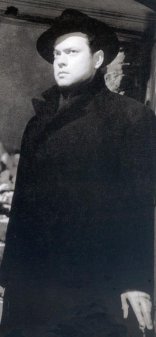
There are two monologues in cinema history that tower over all others, and you know what they are. That's right: Brando's despairing "I coulda been a contender, I could been somebody," speech as Terry Malloy in On the Waterfront (1954); and Orson Welles' "cuckoo clock" speech in diabolical justification of his crimes as Harry Lime in The Third Man (1949).


And these may be clunkers, but they are fun:
How about Andie McDowell as Carrie, resembling nothing so much as a drowned rat, to the sodden Hugh Grant in the downpour that marks the end of Four Weddings and a Funeral (1993): "Is it raining? I hadn't noticed." Or Sean Connery in Goldfinger (1964), cracking a crime ring and keeping straight-faced long enough to deliver the line: "At least they won't be using heroin-flavoured bananas to finance revolutions."

You could fill a phone book with atrocious lines from sci-fi and horror movies, but we'll content ourselves with two examples. Here's Roddy Piper in John Carpenter's They Live (1988) as Nada: "I have come here to chew bubblegum and kick ass. And I'm all out of bubblegum." And, from Flash Gordon (1986): "I love you, Flash, but we only have 14 hours to save the Earth."

Sunday, October 29, 2006

Plot-o-matic

The movie plot generator is a work of demonic genius. Three different sections allow for 27,000 different combinations. The top row picks the character(s) -- a cop who doesn't play by the rules, a nerdy computer geek, Hitler. The second row sets the scene -- befriends the creatures of the forest, fights crime, becomes nanny to a bunch of suburban children. The third row tells us where it's all going -- in this heartwarming animated adventure, in the feel-good comedy of the year, and, my personal favorite, and discovers the true meaning of Christmas.

Think about it: "The Pacifier," "She's the Man," every buddy-cop movie ever made. This explains so much.

Saturday, October 28, 2006

Movie gadgets (another list)

Cinematical has a great list of the movie gadgets we'd most like to have. Showing admirable restraint, there's only one (all-purpose) Bond toy on the list. The "Men in Black" memory eraser-thingy, R2D2, "Blade Runnder's" photo enhancer, "Sleeper's" Orgasmatron -- all great choices. The commenters have some good additions, like "Back to the Future's" Delorean and shoelace-tie-er.

Friday, October 27, 2006

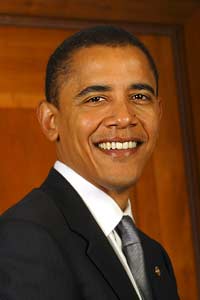
My dad tells Barack Obama it's time


Remember what Lloyd Bentsen said to Dan Quayle? "Senator, I served with Jack Kennedy, I knew Jack Kennedy, Jack Kennedy was a friend of mine. Senator, you are no Jack Kennedy...You are the one that was making the comparison, Senator — and I'm one who knew him well. And frankly I think you are so far apart in the objectives you choose for your country that I did not think the comparison was well-taken."

In this op-ed, my dad says he knew Jack Kennedy, and Barack Obama, two years older than Kennedy was when he became President, is ready to take on the job.

Quotes of the Week -- round-up

This week's release of "Conversations with God" inspired several critics, though not perhaps the way it intended:

LA Weekly's Tim Grierson:

Beyond a lack of enthralling characters or convincing plotting, though, what’s most glaringly missing in this self-promotional marketing tool is, of all things, God, who gets only a bit role as Walsch’s muse in a few scenes. He really oughta fire His agent.

St. Paul's Pioneer Press' Chris Hewitt:
"Conversations With God" is not a movie; it's a brand extension.

The Washington Post's Ann Hornaday:
If (director) Simon's desire to feed the better angels of our nature is admirable, it would be nice if he could do it with better movies.

Thursday, October 26, 2006

Corporate Crooks


For a glimpse of my non-movie life, take a look at my appearance on the Lehrer Newshour this week.

I Defy Anyone Not to Click on these

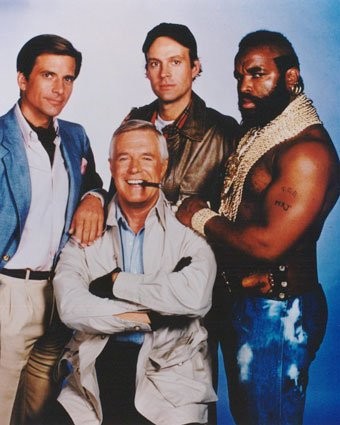
Pajiba's list of the most memorable TV theme songs includes "The A-Team," "The Twilight Zone," and, of course, "Gilligan's Island," "Cheers," and "The Simpsons." A little bit too 80's-focused for me, but all of the choices are superbly evocative (even "The Care Bears") and the special bonuses are tremendous, like a "Seinfeld" clip with George's answering machine message a parody of the theme song from "The Great American Hero." I pity the fool who tries to get through this list without having at least 15 minutes to waste on it.

P.S. My husband would never forgive me if I did not post his favorite.