Thursday, January 25, 2007

CCFC on the Bush/Baby Einstein plug

Who could imagine that one of the most controversial statements of the 2007 State of the Union was the plug for Baby Einstein? Here's the statement by the Campaign for a Commercial-Free Childhood, which has filed a Federal Trade Commission complaint against Baby Einstein for false and deceptive marketing.

It is extremely disappointing that the President used his State of the Union address to provide a free infomercial for a company built on false and deceptive marketing. Despite its claims, there is no evidence that watching Baby Einstein videos is educational for babies and toddlers.

The President claimed that Ms. Aigner-Clark "represents the great enterprising spirit of America." We respectfully disagree. We don't believe that preying on parents' concerns about their children's well-being; deceiving customers about a product's benefits; or exploiting our youngest and most vulnerable children should have any role in the American marketplace.

Research suggests that -- for babies -- TV viewing may be harmful. It's been found to interfere with cognitive development, language development and regular sleep patterns. The more time babies spend in front of TV, the less time they spend engaging in two activities that really do facilitate learning: interacting with parents away from screens, and spending time in creative play.

TV viewing can also be habituating. For older children, hours of television watched are linked to bullying, poor school performance and childhood obesity.

Despite these concerns, more babies are spending more time in front of televisions than ever. They do so, in part, because well-financed sophisticated marketing campaigns insure that we've all heard of Baby Einstein. Meanwhile, only 6% of parents are aware of that the American Academy of Pediatrics recommends no screen time for children under two.

Americans would be much better served if the President used the bully pulpit to promote the AAP's recommendation rather than promoting a company whose marketing deceives parents into believing that it's educational to plop babies in front of screens.

Movie Mom in Ask Amy and Slate

I'm in "Ask Amy" today!

ASK AMY

Thursday, January 25, 2007; C04

Dear Amy:

My husband and I made a New Year's resolution to give up television. We were going to try it for only a week, but I wanted to write and tell your readers what a revelation this experiment has been for me. I expected to gain more time in my life, but I never expected to feel completely different.

The first few days were hard. To determine the effects, I decided not to listen to the radio and to spend the day in silence. I was off work that week. In addition to gaining hours of time, I am finding myself mellower than I ever would have imagined. I was always multi-tasking, and the TV was generally on as background noise.

It seems that even the sheer volume of sound kept me agitated. Now I'm feeling relaxed all of the time! My Type A personality is morphing into something very different. I'm even driving completely differently.

Even though we agreed that we could now put the TV back on, neither of us wants to go back to it. We are getting our news from the newspaper. I'm wondering if there are other readers who have tried this?

Very Mellow

Your choice to give up television shouldn't seem like such a radical concept, and yet it is. A recent Nielsen study shows that the average American household has the television on for more than eight hours each day.

I shared your letter with Nell Minow, who as the "Movie Mom" reviews films for Yahoo and who often writes about the effects of media on family life.

Minow and I love your New Year's resolution. "People have no idea about how much they can reduce the 'frenzy factor' in the home by simply turning off the TV. I'm convinced that this media overload contributes to attention issues for children and adults," she says. She suggests that, like you, people occasionally go "cold turkey" by eliminating all screen time for one week each month, or a day each week, to reconnect with life without media noise.

People can make a significant change in their lives by simply not using the television as visual wallpaper.

Also, Timothy Noah of Slate shares my view of the President's shout-out to Baby Einstein in this Chatterbox column and is nice enough to quote my original Tribune piece on the subject.

Tuesday, January 23, 2007

Bush pushes Baby Einstein

It is appalling that President Bush used the founder of Baby Einstein as an example of American entrepreneurial zeal in his State of the Union address. It's like some intrusive product placement. Worst of all, he has turned the annual address to the nation into an infomercial promoting DVDs for infants and toddlers, a product that is contrary to the recommendations of the American Academy of Pediatrics* that children under age 2 have no "screen time" at all in front of a television or computer. Not one study has shown any benefit to children from these materials (which is why they say they make no "educational" claims and admitted to me that their materials are not "research-based"). Several studies have documented deficits in what children learn from them compared to what they learn from direct observation and interaction.

A President who is married to a former teacher and host of the National Book Festival should know better. No child left behind? Then maybe he could recommend that parents read to their children instead of sitting them down in front of the television.

*Thanks to my commenter Bryan for correcting the name of the organization.

Popwatch stumper

Entertainment Weekly's Popwatch has a weekly Headscratcher and I'm proud to say I got the answer to this one. What do the following actors have in common?

Morgan Freeman
Robert Redford
Kim Stanley
Spencer Tracy
Joanne Woodward

I'll give the answer on Monday, after EW posts the winners.

And here it is -- all were narrators in feature films in which they did not otherwise appear.

Freeman narrated 2005's War of the Worlds. (He also narrated March of the Penguins that same year, a movie that neither he nor anyone else acted in.) Redford narrated (and also directed) A River Runs Through It. Stanley voiced the adult Scout in To Kill a Mockingbird. Tracy narrated How the West Was Won, and Woodward gave an Edith Wharton-esque voice to The Age of Innocence.


And all were nominated for Oscars, which makes it timely. Happy Oscar nomination day!

Saturday, January 20, 2007

And more from EW (my dad and another list...)

Stephen King not only quotes my dad in his latest Entertainment Weekly column about television; he agrees with him! And the same issue of Entertainment Weekly busts the biggest stars in Hollywood for their biggest sellout roles, from Ben Affleck in "Paycheck" to Faye Dunaway in "Supergirl," Marlon Brando in "Superman," and Robert DeNiro in "Rocky and Bullwinkle."

Tuesday, January 16, 2007

Hanks. Tom Hanks.


I'm pretty much over the usual faux trailer mash-ups, "Finding Nemo" crossed with "Mission Impossible III," "Star Wars" in the silent era, etc. etc. But this Hanks-as-Bond clip is worth a look for its exhaustive mining of the Hanks oeuvre (bonus points for the clips from "Big" and "The Money Pit") and its Chuck Workman-level mastery of the timing of the edits.

Friday, January 12, 2007

It's a Crock!

Thank you, EW's popwatch for this public service announcement:

You've probably seen advertisements for the horror flick Primeval -- opening today in theaters nationwide -- touting that the film is "inspired by the true story of the most prolific serial killer in history," that this monstrous killer has taken "over 300 victims," and that "to this day, he remains at large." You probably wouldn't guess, however, that this killer is, in fact, a giant crocodile.

Besides the fact that this ad campaign is just plain misleading, it irks me to no end that the marketing team for Hollywood Pictures thinks they'll attract audiences by calling a serial killer "prolific" -- like, you know, Stephen King's prolific, or Rachael Ray. Which is not to say necessarily that the movie is bad, but since it also did not screen for critics in advance, consider this Popwatch PSA fair warning before you plunk down your money for a ticket.

Speaking of big crocs -- what other movies have had deceptive ad campaigns?


There are zillions of deceptive ad campaigns that lead you to expect the movie will be as funny or exciting as the trailer, only to find that you've already seen everything worthwhle in the trailer itself (I believe "Hercules" was the first to figure out the beauty of this approach, as by the time you realized you'd been duped, you'd already paid for your ticket). But in terms of being actually misleading, I vote for "Angel Eyes." The trailer made it seem like something supernatural when it was really a conventional story about people recovering from (1) a catastrophic accident and (2) domestic abuse.

Thursday, January 11, 2007

Most inspirational Movie Quotes 2006


Thanks to Reel Fanatic for directing me to Reel Life Wisdom's list of the most inspirational movie quotes of last year.

I can't say I agree with all of them -- that fortune cookie aphorism from "Rocky Balboa?" You've got to be kidding me. And the "Man of the Year" line was old here in Washington back when Chester A. Arthur was President. But I, too, liked these, and I am always happy to see the screenwriters recognized, especially Mark Twain(!):

1) "Every show's your last show. That's my philosophy."
A Prairie Home Companion - Screenwriter: Garrison Keillor

2) "The further you run from your sins; the more exhausted you are
when they catch up to you."
Inside Man - Screenwriter: Rusell Gewirtz

3) "You got a dream, you got to protect it. People can't do something
themselves, they want to tell you that you can't do it. You want
something? Go get it."
The Pursuit of Happyness - Screenwriter: Steve Conrad

4) "He gets down to the end of his life and he looks back and decides
that all those years he suffered, those were the best years of his life
because they made him who he was. All those years he was happy,
you know, total waste. He didn't learn a thing."
Little Miss Sunshine - Screenwriter: Michael Arndt

8) "What gets us into trouble is not what we don't know. It's what we do know
for sure that just ain't so."
An Inconvenient Truth - Screenwriter: Al Gore (quoting Mark Twain)


For me, the best movie quotes from 2006 would include just about everything Dustin Hoffman said in "Stranger than Fiction," like this:

Dr. Jules Hilbert: The thing to determine conclusively is whether you are in a comedy or a tragedy. Have you met anyone who simply might loathe the very core of you?
Harold Crick: I'm an IRS agent. Everyone hates me.
Dr. Jules Hilbert: Well, that sounds like a comedy!

Dr. Jules Hilbert: Hell Harold, you could just eat nothing but pancakes if you wanted.
Harold Crick: What is wrong with you? Hey, I don't want to eat nothing but pancakes, I want to live! I mean, who in their right mind in a choice between pancakes and living chooses pancakes?
Dr. Jules Hilbert: Harold, if you pause to think, you'd realize that that answer is inextricably contingent upon the type of life being led... and, of course, the quality of the pancakes.

Sunday, January 07, 2007

The Movie Mom's Dad

Today's Chicago Tribune has my dad's superb op-ed about one of Gerald Ford's most significant and least remembered contributions -- his decision to debate Jimmy Carter is what made televised Presidential debates into an institution.

Saturday, January 06, 2007

List of lists and critiquing the critics

Greencine puts it all together for you with a list of lists from a wide variety of critics.

But the guilty pleasure of the month has to be from Eric Childress with his list of the most reprehensible movie critic "quote whores," those folks who will give the studios a "Magnificent!" "Oscar-worthy" "Fun for the whole family!" "A must-see!" for their most mind-meltingly atrocious catastrophes.

I was especially gratified to see Janet Stokes and the all-but-imaginary "Film Advisory Board" listed. Her utterly indefensible and misleading raves include:

Doogal - Laugh-out-loud funny! An adventure that both kids and adults will love!
Eragon - Magnificent. A magical adventure for the family.

The Pink Panther - Sheer enjoyment for all the family.
Deck the Halls - A family comedy that’s a true holiday treasure.


As he notes, the last two are truly reprehensible as the movies include raunchy humor that is completely inappropriate for children.

Thanks to Eric Childress for his tireless research in the name of integrity.

Dumbest/Worst Movie Moments


To quote Mrs. Miniver, lists are "indefensible but irresistible." And the most satisfying are worsts, not bests.

Keith Demko of the always-enjoyable Reel Fanatic blog has posted his worst movies of 2006 list, and his always-reliable commentors have added their thoughts.

This list of Dumbest Movie Moments prompted a great outpouring of pain from Washington Post readers eager to share their miserable moments. Here was my addition:

Unquestionably -- the end of "Sphere." The greatest gap between talent/achievement of the actors/writer/director and result in the history of movies.

Other bonehead endings: "The Forgotten," "Gothika," "Flightplan," "Desperate Measures." THE VERY DUMBEST EVER.


Radio listeners who hear my reviews will be familiar with the "Nell Minow Gothika Rule" that I invoke for movies with unforgiveably idiotic endings. I will give away the ending for anyone who sends me an email. "Desperate Measures" and "Sphere" were before my time, but the others gave me great pleasure only in saving my listeners from having to suffer through them as I did.

Friday, January 05, 2007

Alan Dale on Borat and Jerry Blank and Voltaire and Brueghel the Elder (not forgetting Judi Dench, Chaplin, and the Marx Brothers)

Alan Dale is still an almost completely cool guy. Here he finds subtlety and depth in "Strangers with Candy." It undermines "our belief in human perfectibility," "as skeptical as Candide without Voltaire's righteous anger simmering just below the ironic froth."

Taken together, the series and movie put folly, self-indulgence, and corruption on display as panoramically as Pieter Brueghel the Elder's Fight Between Carnival and Lent, except that there's not even a corner of the vision dedicated to a meaningful spiritual authority. Strangers With Candy reposes so little faith in our aspirations that life becomes one extended example of comic bathos. The makers see our species as worse than it is and laugh nevertheless, infectiously; not laughing in response would, if anything, make you more like the characters rather then less.

Of course, this kind of irony doesn't present the whole truth. Rather, it's intended as a counterweight to the countless romances that glamorize or gloss over unpleasant facts and intractable problems, and that spin fantasies of accomplishment for us to project ourselves into. Even given its extreme bias, irony like Strangers With Candy can be more honest than such romances, and more recognizable. At the same time, insofar as Strangers With Candy is comic irony, it favors impact over plausibility, shocking us by assuming our identification with the loser-protagonist as she fails in ways that are depicted with no quarter for taboos or sensitivities.


...

Sedaris gives the most staggering female slapstick performance in the exaggerated, creepy-frantic Keystone vein in movie history, and with more tang than any Keystone comedienne ever had. As Jerri, Sedaris embodies an ironic view of human nature that borders on a revelation of the horror of total hopelessness but then turns that glimpse of horror back into all-out burlesque. With the series and now the movie, Sedaris has become the all-time queen of the one-dimensional, so-bleak-it's-comic visionary. (For my money, she gave the most unforgettable performance by a lead actress in 2006, edging out even Judi Dench, who in Notes on a Scandal finally gave the astonishing performance she has repeatedly been credited with.)


His comments on Borat are not as provocative:

Cohen has two main sources of inspiration: a low cunning about what will puzzle, shock, offend, or outrage people and a live-comedy genius for taking his victims slowly, by degrees.


But I think this is just right:

Cohen's shtick is almost entirely opportunistic; far too much has been made of the content of what Borat says and elicits from his victims. Most of the humor that doesn't derive from the tension of live encounters with unwitting participants is dialect humor about the simplicity and backwardness of immigrants, which was a staple of the vaudeville circuit. And the fact that the rodeo audience seems at first to go along with Borat's zany oratory doesn't tell you anything besides the fact that an audience hearing something so out of the ordinary will react slowly, because it's out of the ordinary and because there can be a certain inhibition among members of a relatively random group. Cohen thus makes possible some highly unusual sociological observation, but the comic substance resides solely in what he's saying and doing.

DVD Gluttony


I just saw this Dalton Ross glutton column about the inability to resist buying a DVD. We've all been there. The trick is remembering the difference between two key, sometimes but not always overlapping criteria. There are movies that are great. We love them. We make lists of them. We respect them. But we don't often have the impulse to sit down and watch them again all the way through. And then there is that key "watchability" standard. The first category will always be there just a Netflix queue slot away. That's for "Paths of Glory," "The Grapes of Wrath," "The Magnificent Ambersons," and the Criterion edition of just about anything. That "to own" category is for movies you want to watch when you have the flu. I'm thinking "Galaxy Quest," "Happy Texas," "The Tao of Steve," "Men in Black," "Get Shorty," "Duck Soup," and, of course, "Weekend at Bernie's." Everything else...just think "catch and release."

Saturday, December 30, 2006

More from my CG side

I got a huge kick out of this set of 2007 predictions about the future of corporate governance. And some of my recent press quotes can be found here, here, here, here, here, and here.


After this, back to movies, I promise.

Thursday, December 28, 2006

Best/Worst

Here is my top 10 movie list for 2006, with Honorable Mentions, and my top 10 family movie list, with Dishonorable Mentions:

Top ten 2006

1. The Queen
2. Letters from Iwo Jima
3. Riding Alone for Thousands of Miles
4. The Departed
5. Little Miss Sunshine
6. Thank You for Smoking
7. Volver
8. Dreamgirls
9. Akeelah and the Bee
10. Happy Feet

Honorable Mention:
Stranger than Fiction
United 93
Inside Man
Dave Chappelle’s Block Party


Top Ten Family Films:

1. Akeelah and the Bee
2. Happy Feet
3. Charlotte’s Web
4. Monster House
5. How to Eat Fried Worms
6. Cars
7. Over the Hedge
8. Open Season
9. Flushed Away
10. The Ant Bully

Dishonorable Mention:
RV
Deck the Halls
The Shaggy Dog
Barnyard

Tuesday, December 26, 2006

The Movie Mom's Mom

My commentary on NPR's Marketplace explains how everything I know about excessive CEO compensation I learned from my mother.

Friday, December 22, 2006

Quote of the Week -- Jeannette Catsoulis


The fabulously talented Jeannette Catsoulis writes with as much wit, insight, breadth of expertise, and spirit as the best of the films she reviews, and often even more deliciously enjoyable. This week, her New York Times review of "Curse of the Golden Flower" is everything film criticism should be -- smart, funny, provocative, wise, and thoroughly entertaining. I'd love to quote it all, but in the spirit of the art form fortunate enough to capture her attention, consider these quotes previews of coming attractions.

With each new martial-arts drama, the Chinese director Zhang Yimou widens the distance between his adult self and his dismal youth during the Cultural Revolution, pushing himself to ever greater heights of ambition and experimentation. Energy and excess — of color, symbolism and emotion — are his antidotes to memories of uniformity and repression. His extravagant stories celebrate unfettered artistic expression as if it were a gift his Western counterparts have long taken for granted. In “Curse of the Golden Flower” Mr. Zhang achieves a kind of operatic delirium, opening the floodgates of image and melodrama until the line between tragedy and black comedy is all but erased.

...
Though embroiled in familiar themes of fraternal rivalry and Freudian jealousy, Mr. Zhang is aware of the ridiculousness of man’s passions in the face of his impermanence. One of the film’s loveliest and most allusive sequences focuses on the royal cleanup crew as it restores order after the bloodbath, rinsing away gore and burying stains beneath a fresh carpet of golden chrysanthemums. In the wake of this shadow army, the battle is erased and the dead are swept aside like so many dust bunnies.

Since his debut in 1987 with “Red Sorghum” Mr. Zhang has made more controlled films but never one that’s more fun. With “Curse of the Golden Flower” he aims for Shakespeare and winds up with Jacqueline Susann. And a good thing too.


And like a movie that reserves its final punch for the credit sequence, even her parental advisory is worth reading:
It has flying assassins, bloody battles and a mother who, like, really loves her sons.

Tuesday, December 19, 2006

Interview with Catherine Hardwicke, director of "The Nativity Story"


Today I interviewed Catherine Hardwicke, director of Thirteenand Lords of Dogtown. Her latest film is The Nativity Story.

You have an unusual background for a director, with your training and previous experience in design. How does that affect the way you approach a movie project?

Yes, I was an architect, a great way to learn problem solving, structural visualization, and imagining what something will look like. I can look at a bare space and say, "I want to build Nazareth here, let’s butild a wall here, let’s build Mary's house here." We built not just Nazareth but Bethlehem. You stand in places that don’t look anything like what you want to film and you will it to life. I would do sketches and then Stefano (Maria Ortolani, the production designer) would do a sketch, and we would work together. Even if you’re not building complete cities, as a director you always need to know "how does this work?"

Because of your experience as a production designer, you got to work with a number of different directors. Did you learn a lot from watching them?

I would totally try to watch and see how the director would work with actors. How do you create that space that lets the actor make that moment seem real and have that moment for the first time, that energy and that life force? I did not just watch but asked a lot of questions of the directors, asked for a lot of advice. I liked watching the different approaches. For example, Cameron Crowe uses music to create the atmosphere and let the actors know what he wants from a scene.

I'm going to ask you the same question I asked Oscar Isaac. Your Mary and Joseph actors came from two different environments -- one from New Zealand, a teenager, natural but untrained, the other from the US and classically trained, still young but out of college. How did you work with them?

Oscar and Keisha and I did try in the place I rented to have a lot of personal rehearsals before we got to the set, a lot of improvising, a lot of "how would you feel?" We would act it out, feel our way through it. She would talk to me about things in her personal life or a friend’s mother, and then on the set, I would just talk to her to bring her right back to that moment. I would tell her to imagine the smell of the food cooking at the background, look at Oscar's calloused hands and say "I’m going to be married to a carpenter -- that’s not what I dreamed for myself." How does that feel?

This makes your third film in a row that focuses on the lives of teenagers. How did you develop your special feeling for that time of life?

That movie Thirteencame out of my own relationship with (co-author and lead) Nikki (Reed) and her mother, trying to be helpful with the stress they were going through as their relationships deteriorated. I wanted to be a positive influence, to be a relief valve for her mother, so I let her friends hang out, we'd go to museums, learn how to draw. I was trying to get them inspired to be creative instead of destructive. Teenagers today have so many influences, they say 3000 advertising images hit you every single day telling you: "Be sexy, be skinny, you’ll be famous, you’ll be rich." Then there's just one little voice from mom saying, "It’s okay honey."

Mary and Joseph faced a different world 2000 years ago, but had some of the same issues -- Mary feeling she was not fitting in, not being the norm, being scorned, having to stand up for what she believed was right.

How do you take a story everyone knows and make it real for both believers and those who are more interested in the story or the history than religious observance?

I thought Mike Rich (the screenwriter) did a great job. He would take the gospels' sentences and verses that were beautiful but very minimal, take one sentence about Joseph being righteous and considering divorcing mary and then research the economic and political life of Nazareth at that time. There is so much behind it. Mary's pregnancy was bringing shame to her family and village, and that is part of the story. You can be completely literal but breathe life into it and dramatize it. How does it feel? What goes on in your heart and mind? It is easy to be literal and true and faithful and still enrich it with historical accuracy and make it personal.

This was a very international cast and crew. I don't think there were two from the same background. What was that like?

That was what was so fascinating! I thought I would cast everyone from the Middle East, but we ended up going everywhere to find people who could be from the Middle East in Biblical times and ended up with cast and crew members from 23 different countries, and then of course even filming a Christian story in a Muslim country. That was so amazing for me, from a little town in south Texas and then California, working with all these people from all these places with such a rich mixture of religions. Everyone connected to the story in their own way. We really saw the similarities in the religions and reactions.

Monday, December 18, 2006

Another list -- "overlooked movies"


I don't like making them myself, but I do enjoy other people's lists, especially those that don't try to be definitive "bests." And here is one that's fun -- The Guardian's list of "lost" overlooked movies. They aren't really lost, of course. Many are well-recognized by movie-lovers. But it's nice to see a little recognition for "Top Secret," "Safe," "Tin Cup," "The Swimmer," and "Narrow Margin" (I like the remake of that one, too). Films I have not heard of ("Babylon," "The Bill Douglas Trilogy," "The Ninth Configuation," "The Low Down") are so enticingly described that I will forgive the list some pedestrian choices (Disney's animated "Robin Hood" and teen hit "Save the Last Dance" are not in the same league as the other films) and some irretrievable messes (the remake of "Breathless?").

I've always wanted to visit Roger Ebert's annual Overlooked Film Festival. But then, I've always wanted to assign people to watch movies like prescription medication -- in many cases, they'd do a lot more good.

Many thanks to EW for directing me to the list.

Sunday, December 17, 2006

Stocking stuffer for your favorite movie fan

Giftflix.com has a good idea -- a gift card that entitles the recipient to two "good" movies. I might quibble with some of their choices -- "Equilibrium" got only a 34% positive rating from Rotten Tomatoes -- but it is easy to use, many of the choices are excellent, and I like the way it includes shipping and handling.

Friday, December 15, 2006

Post-ed

Washington Post critic Desson Thomson was nice enough to mention me in today's online chat. Oh, and on Wednesday, Sarah Goo quoted me in a story about something related to my non-movie life -- an innovative (but I think not very significant) new twist on stock options from Google.

Chain gang


Ann Hornaday's Washington Post article about "supply chain" movies describes a new and increasingly popular kind of horror movie. Films like "Fast Food Nation," "Blood Diamond," "Syriana," and "Black Gold" as well as documentaries like "Super Size Me" and "Darwin's Nightmare" show those of us lucky enough to be at the top of the consumer food chain what goes in to bringing us those burgers, engagement rings, gas station fill-ups, and four-dollar lattes. Think of them as one big Kathy Lee Gifford intervention. Let me put it this way. In "Fast Food Nation," a teenager spits into a burger just before it is served to an executive from the chain's corporate headquarters, and that's the least unappetizing thing that happens to it.

Hornaday points out that the success of these movies is not measured in box office but in consciousness-raising.

In a recent telephone interview, Zwick said his criterion for success is based on consciousness, not box office clout. "The 19-year-old kids in the multiplex who don't know [anything] about Africa, if they take away a certain number of iconic images or ideas about issues, that will be success for this movie," he said.
Politicians and corporations can be embarassed into change by movies even if they don't make the top 10 in box office returns. Hornaday notes that WalMart has made some changes following the documentary criticizing its practices. Today's Post reports that the State Department has had to respond to the issues raised by the film. Anyone who sees the movie won't think of bling the same way anymore. I predict that the visibility of "Blood Diamond" will encourage jewelers to include documentation of their compliance with the Kimberley principles that ensure the gems were legitimately mined and sold alongside the "this is what she wants" slogans in all those holiday ads.

Wednesday, December 13, 2006

Best Business Movie lists

The Smart Lemming blog has Lori Grant's lists of the best business movies along with some others she found:

While three out of the four sites chose the Citizen Kane, I love comedies like Baby Boom, The Secret of My Succe$s, Trading Places, and Office Space. Here are my top 10 business movies:

Baby Boom (1987): I love this movie. Forget the adorable baby. I love seeing J.C. Wiatt build a business from scratch, ultimately having the option to be acquired by her former employer. This movie is perfect when you need some motivation on your startup.
The Secret of My Succe$s (1987): Another movie perfect for getting motivated about your career. Brantley Foster played by Michael J. Fox plays an ambitious upstart who gets ahead by sleeping with his aunt! Sounds creepy, but it works. And he eventually becomes CEO, which is the feel-good ending for up and coming knowledge workers who aspire to run a company.
The Godfather: Part II (1974): I love this movie. It’s about family business, loyalty, and about consequences (at least from my perspective). Today, I’m no longer “loyal” anymore to employers, but committed to my work for employers. This movie resonates with me because deep down I do believe in loyalty. I think it’s a noble trait and love this movie for it. And the quotes! My favorite quote: “My father taught me many things … keep your friends close, but your enemies closer.”
The Godfather (1972): “Go the mattresses…” “I’m gonna make him an offer he can’t refuse.” Need I say more?
In Good Company (2004): Dennis Quaid’s character is seasoned and graceful as he’s demoted after a corporate takeover. Quaid must report to a younger boss, Topher Grace, who’s inexperienced, a little arrogant, and frankly a corporate fool. However, by movie’s end, Quaid returns to power as he graciously offers to mentor Grace, who wants to find what he really wants to do. I like the realism of movie. It’s sucks to be demoted, but it was encouraging to see Quaid’s character handle it as a seasoned professional.
Glengarry Glen Ross (1992): Sales is hard. Managing sales is a tough job, but doing sales? You couldn’t pay me enough to be a sales person. This film depicts how sales people handle stress differently. My description doesn’t give it justice.
Wall Street (1987): A great movie that compares and contrasts a father and son’s values. Moral of the story for me was “there are no short cuts.”
Trading Places (1983): I love this movie just because I like rags to riches stories. Or in Dan Aykroyd’s case, from riches to rags to riches.
Office Space (1999): Cubes. I hate cubes. This movie perfectly depicts cubeland. I think I resigned from a job because my employer moved locations, only to put is in new cubes that were 1/3 smaller than our old ones.
Antitrust (2001): There aren’t many movies about the technology industry so it was great watching a fictional vertical in my industry.


Here's my own list of Corporate Governance movies:

Enron: The Smartest Guys in the Room Brilliant documentary about what happened at Enron. I only wish they had included the fake trading floor and of course the compromised and negilgent board of directors.
The Solid Gold Cadillac This is the one I showed my children to tell them what mommy did at the office. Add two zeroes on to the end of each number, and every bit of it would be just as apt today.
The Hudsucker Proxy The Coen brothers bring their uniquely cracked sensibility to a 30's-style movie with stunning visuals.
Other People’s Money DeVito (Money) vs. Peck (Heart) for the future of a quaint little company.
Roger & Me Michael Moore's take on General Motors.
Wall Street If Michael Douglass as Gordon Gekko was not an obnoxious crook, his "greed is good...greed, for want of a better word, works" speech would not be so outrageous.
Boiler Room "Wall Street" on crack.
Executive Suite The quinessential post WWII corporate conundrum -- should the new CEO be the cost-cutting green-eyeshade CFO (Fredric March) or the benvolent believer in corporate citizenship (William Holden)?
It’s a Woman’s World The choice of the new CEO will depend on their wives.
Owning Mahoney Based on the real-life story of the largest bank fraud in Canadian history, this story about a bank officer who steals and gambles away $20 million brilliantly dissects the risk assesments of everyone in the story, from the bank loan officers to the casino operators to the federal authorities.
Erin Brockovich Many movies have corporate bad guys, but this one has two advantages -- a real-life story of utter despicability and a heroine of utter irresistibility.
Silkwood Another real-life story with brilliant performances, this is about more then corporate corruption; it is about the soul-deadening nature of bureaucracy and meaningless piecework.
The Corporation If a corporate is considered a "person" under the law, this movie diagnoses it as sociopathic.
Modern Times Charlie Chaplin gets (literally) caught in the corporate machine.
How to Succeed in Business Without Really Trying This wild musical is less of an exaggeration than you might think.
Office Space A cult classic examination of the soul-destroying aspects of office life, and absolutely hilarious.
Startup.com An extraordinary documentary about dot.com madness with unforgettable characters.
Tucker Based on the real story of the man who tried to take on the big three auto makers.
Who Killed the Electric Car? Brilliant documentary about how a better idea that threatens the status quo was killed by corporate pressure on the politicians.


And now, from smartlemming:

Here are the Forbes, Askmen.com, Inc. blog, and Meryl Notes for your reference
Forbes The Ten Greatest Business Movies by Dan Ackman, 12.16.02

Citizen Kane (RKO Radio Pictures, 1941)
The Godfather: Part II (Paramount, 1974)
It’s a Wonderful Life (RKO Radio Pictures, 1946)
The Godfather (Paramount, 1972)
Network (MGM-United Artists, 1976)
The Insider (Touchstone Pictures, 1999)
Glengarry Glen Ross (New Line Cinema, 1992)
Wall Street (20th Century Fox, 1987)
Tin Men (Touchstone Pictures, 1987)
Modern Times (United Artists, 1936)

Askmen.com Best Business Movies Ever By Ash Karbasfrooshan

Citizen Kane (1941)
Wall Street (1987)
Trading Places (1983)
Glengarry Glen Ross (1992)
Jerry Maguire (1996)
Barbarians at the Gate (1993)
Goodfellas (1990)
Pirates of Silicon Valley (2000)
Clerks (1994)
Boiler Room (2000)

Inc. Blog Top 10 Business Movies Posted by Laura Rich

The Aviator
It’s a Wonderful Life
Citizen Kane
Wall Street
Tucker: The Man and His Dream
Glengarry Glen Ross
What Women Want
Working Girl
The Hudsucker Proxy
The Insider

Meryl’s Notes 10 Best Business Movies
Wall Street
It’s a Wonderful Life
Nine to Five
Shall We Dance?
All About Eve
Disclosure
Woman of the Year and Adam’s Rib
Stand and Deliver
Philadelphia
Erin Brockovich
Office Space

Monday, December 11, 2006

DC critics awards


The Washington Area Film Critics have announced our awards:

The Washington, DC Area Film Critics Association (WAFCA) today selected a movie honoring the memories of the brave heroes of September 11, the poignant United 93, as Best Film of the Year in a victory that could spur the movie's burgeoning Oscar hopes. Director Martin Scorsese was voted by the group as Best Director for his smash hit movie The Departed,

Forest Whitaker (The Last King of Scotland) was named Best Actor, and Helen Mirren (The Queen) continued her march to the Oscars as she was named Best Actress as both actors brought characters to real, and even sympathetic, life.

"What a wonderful way to celebrate our fifth anniversary by honoring this fine collection of talented films and groundbreaking performances. This year gave us true cinematic royalty with a Queen, a King and a Dreamgirl," said WAFCA President Tim Gordon.

As a sign of the strength of her performance and show stopping ability that brought ovations during screenings in DC, Jennifer Hudson (Dreamgirls) was a two time winner awarded Best Supporting Actress and Breakthrough Performance of the Year. In other categories, Djimon Hounsou (Blood Diamond) was named Best Supporting Actor, Happy Feet danced away with Best Animated Feature and Pan's Labyrinth Best Foreign Language Film.


Additionally, WAFCA honored two first time feature length screenwriters as Jason Reitman walked away with Best Adapted Screenplay for the DC-based Thank You For Smoking and Michael Arndt won Best Original Screenplay for the summer's surprise indie hit Little Miss Sunshine.

The Washington, DC Area Film Critics Association is comprised of 36 DC-
based film critics from television, radio, print and the internet. Voting was conducted from December 9 - 10, 2006.

Final Results 2006 Washington, DC Area Film Critics Association Awards

Best Film
United 93/Universal

Best Actor
Forest Whitaker - The Last King Of Scotland

Best Actress
Helen Mirren - The Queen


Best Supporting Actor
Djimon Hounsou - Blood Diamond

Best Supporting Actress
Jennifer Hudson - Dreamgirls

Best Director
Martin Scorsese - The Departed

Best Screenplay, Original
Michael Arndt - Little Miss Sunshine

Best Screenplay, Adapted
Jason Reitman - Thank You For Smoking

Best Foreign Film
Pan's Labyrinth/Picturehouse

Best Animated Feature
Happy Feet/Warner Brothers

Best Documentary
An Inconvenient Truth/Paramount Classics

Best Breakthrough Performance
Jennifer Hudson - Dreamgirls

Best Ensemble
Little Miss Sunshine/Fox Searchlight

Best Art Direction
Marie Antoinette/SONY Pictures Entertainment

Sunday, December 10, 2006

LA Film Critics Awards

LOS ANGELES FILM CRITICS ANNOUNCE 2006 AWARD WINNERS


LOS ANGELES, DECEMBER 10, 2006 "Letters from Iwo Jima" was voted Best Picture of the Year, it was announced today by Henry Sheehan, President of the Los Angeles Film Critics Association (LAFCA). The runner up was "The Queen."


LAFCA's 32nd annual achievement awards ceremony will be held Sunday, January 14 at the Park Hyatt Hotel in Los Angeles. www.lafca.net


Other award winners are:

DIRECTOR: Paul Greengrass, "United 93"

Runner-up: Clint Eastwood, "Flags of our Fathers", “Letters from Iwo Jima”

ACTRESS: Helen Mirren, "The Queen"

Runner-up: Penelope Cruz, “Volver”

ACTOR: Tie – Sacha Baron Cohen, "Borat" and Forest Whitaker, “The Last King of Scotland”

SCREENPLAY: "The Queen" by Peter Morgan

Runner-up: “Little Miss Sunshine” by Michael Arndt

SUPPORTING ACTRESS: Luminita Gheorghiu, "The Death of Mr. Lazarescu"

Runner-up: Jennifer Hudson, "Dreamgirls"

SUPPORTING ACTOR: Michael Sheen, "The Queen"

Runner-up: Sergi Lopez, "Pan’s Labyrinth"

FOREIGN LANGUAGE FILM: "The Lives of Others" directed by Florian Henckel von Donnersmarck

Runner-up: "Volver" directed by Pedro Almodovar

DOCUMENTARY/NON-FICTION FILM: "An Inconvenient Truth" directed by Davis Guggenheim

Runner-up: "Darwin’s Nightmare" directed by Hubert Sauper

PRODUCTION DESIGN: Eugenio Caballero, "Pan’s Labyrinth"

Runner-up: Jim Clay, Veronica Falzon, Geoffrey Kirkland, "Children of Men"

ANIMATION: “Happy Feet" (George Miller)

Runner-up: “Cars” (John Lasseter, Joe Ranft)

MUSIC: Alexandre Desplat, “The Painted Veil” and "The Queen"

Runner-up: Thomas Newman, "The Good German" and “Little Children”

CINEMATOGRAPHY: Emmanuel Lubezki, "Children of Men"

Runner-up: Tom Stern, "Flags of our Fathers” and “Letters from Iwo Jima"

NEW GENERATION: Michael Arndt, Jonathan Dayton, Valerie Faris – “Little Miss Sunshine”

CAREER ACHIEVEMENT: Robert Mulligan (previously announced)

INDEPENDENT/EXPERIMENTAL: Tie - “Old Joy” directed by Kelly Reichardt and “In Between Days” directed by So Yong Kim

SPECIAL CITATIONS: To Jean-Pierre Melville’s 1969 film “Army of Shadows” which had its U.S. premiere this year, and to Jonas Mekas for his career as a critic and filmmaker.

Friday, December 01, 2006

Nick at Night on WGN


There is no one I love to talk to about movies more than Nick DiGilio. He is knowledgeable, passionate, very smart, very funny, and as much fun to disagree with as to agree with. I've been on his wonderful radio program on WGN in Chicago many times, but last Friday was a special treat as I got to be there in person. Thanks again, Nick and Andy and I can't wait for the next time!

Host Your Own Film Festival

Film Movement is a DVD-of-the-month service featuring the best in independent film. And for a limited time, you can use code filmgift10 to get 30% off. A great gift idea for your favorite cineaste.

Thursday, November 30, 2006

Sampling history in the movies

Desson Thomson has a great piece in today's Washington Post about the way recent movies seamlessly blend historical footage into their stories. It was a bit of a stunt in "Zelig," "Forrest Gump," and "Dead Men Wear Plaid," but in movies like "Bobby," "The Good German," and "The Queen," it enhances the way that the fictional characters respond to real-life events. Thomson compares it to sampling classic riffs in a hip-hop song.

As we watch the candidate deliver his ill-fated victory speech -- moments before his assassination -- the interplay between real footage, our knowledge of what's to come and the dramatic reactions of actors such as Hopkins and William H. Macy make us believe we've witnessed Kennedy ourselves. The emotional jolt we're feeling in that moment is a response to something that happened almost 40 years ago.


How much better this is than watching actors -- no matter how assured -- replaying famous people of the past. In Oliver Stone's 1995 "Nixon," Hopkins can never really make us feel we are in the presence of the former president. And try as he might, Bruce Greenwood in the 2000 Cuban missile crisis picture "Thirteen Days" can never evoke President Kennedy the way actual images can. Playing real life people is so analog. In this digital age, why not roll out the real McCoys? This way, great figures of history can walk among us again.

The cross-pollination of images is such a regular part of our Internet-savvy lives -- right now, with just a few Google clicks, you could watch Vice President Cheney spit out Al Pacino's profanity-laced speech from "Scarface." Despite the questionable taste of showing a real president being killed in "Death of a President," it's gratifying to see filmmakers find greater purpose -- and thoughtful artistry -- in our ever-growing backlog of history. Not only can this development underscore movies as a viable pop-cultural force during a time of changing technology, it gives younger generations a living, breathing link to what might otherwise seem a dusty past.

Interview with "Joseph" -- Oscar Isaac

Oscar Isaac plays Joseph in the respectful new retelling of "The Nativity Story," opposite "Whale Rider's" Oscar-nominated Keisha Castle-Hughes as Mary. Isaac is a 2005 graduate of Julliard with an impressively wide range of performances already. He plays a Russian gangster in the forthcoming "PU-239" and will be in Stephen Soderbergh's "Guerilla" and has appeared on "Law and Order," a musical version of "Two Gentlemen of Verona," and in the title role of "Macbeth."

He spoke to me about appearing as a man everyone knows, but no one knows well: Joseph, husband of Mary, the mother of Jesus, and the man who brought her to Bethlehem. We spoke on November 8, 2006, in the Ritz Carlton Hotel in Washington DC.

You had a very international cast and crew. How was that a help and were there any ways it made the project more challenging? We agreed we would have one united "middle eastern-ish" accent for all of us. It was a lot of fun because I was the only American in the cast, so the others were constantly berating me with questions.

You were working opposite a very talented actress, but someone who was very young and did not have the benefit of your level of training. How did you find a way to work together? She's so naturally gifted, she is so natural, such a deep soul, so in touch with that, that it was easy to work with her. She had to ride a donkey for eight hours at a time with heavy robes and the fake plastic belly, and she always had a great sense of humor about it. I tend to be very serious and deep into the character. She's remarkable, she has an old soul, very present for the performance but ready to laugh as soon as it's done.

Director Catherine Hardwicke has shown as a director a real feeling for the point of view of teenagers. How was that a factor in telling this story? I found out she was the director, I said "Really, that's an interesting choice," but I realized it is completely logical because she's always done stories about adolescents going through intense periods and these are the most famous adolescents in history going through the most intense experience in history. She is great at cutting through stuff and getting to the heart of it, she'd take Keisha off to the side and when she came back she'd be more intense and focused. Catherine relates very well to adolescents and their perspective on what is happening to them.

How was your classical training helpful in developing this character? Did you focus more on research or on motivation? Both. I do a mixture of inside-out and outside-in when I prepare for a role. In this case, the hands were very important to me. I thought about Joseph -- he lives in the first century. The Jewish people at that time identified with two things most, the faith and their ties to the land. The key is in the hands. The script talks about his calloused hands. I worked with a technical advisor for a month with authentic tools of the period. I made the staff, the olive press, the walls of the house and I got the real calluses, making him a flesh and blood person, not a walking icon.

How do you take a character who is in some ways so well known and in others so little known and make him both a distinctive character and an archetype? Joseph is going to be an archetype; the work has been done for you. But he is human. It's not that he doesn't feel fear, jealousy, betrayal, and doubt. The one word that describes him in the Bible is "righteous." His actions are righteous. Courage is not being fearless but working through the fear. Joseph decided not to stone Mary or divorce her publicly, even though that was his right and that was the law. Being righteous in that case does not mean following the law; it means love and humility and faith. He's in love with Mary and he believes in her. Where does it come from -- that selfless, humble, love? The most amazing act of humility is the essence of the story, how God made himself flesh in the most humble of ways with the most humble people. Jesus was not born to kings or to wealthy people but to Mary and Joseph, poor but righteous.


How did the setting help you understand the characters? When we were filming the scene out in the wilderness, when we were traveling to Bethlehem, starving, down to the last piece of bread, and I feel my bread to the camel -- I wish there had been a camera behind me so people could see what I was seeing, the sun was setting, the moon rising at the same time. It was so stirring. For Joseph in that scene, the sign he asks for doesn't come, but for me, for Oscar, the sign was there.

Who are some of your influences? What were the performances that led you to want to become an actor? Pacino in Dog Day Afternoon. For any film I do, I watch it. I watch it once a month for homework; it taught me as much as Julliard did. I love Midnight Cowboy, Taxi Driver, incredible performances. I want to add to the medium the way they do. I loved Ryan Gosling in Half Nelson-- so egoless, so into it, so all about the craft, Daniel Day Lewis in anything, a kind of inarticulation.

How does this movie appeal to believers who will want to see their own vision of the story and those who are not as familiar and approach it as a narrative rather than as worship? It doesn't follow one gospel. It incorporates a fuller, dramatic vision. For both believers and those who come for the story, the message of humility and love is an important reminder that it's not about bombast and pride. God he has brought down the rich and exalted the humble and the poor. It is a huge epic adventure with this little intimate love story about these two people, and how they really become a family. This is a story of the Jewish people, we have to let people understand that, so it was critical to get the customs right, get the words right, get the prayers right. That's why the message is so great; it is about humility and exalting the humble and those that react in love.

Monday, November 27, 2006

The Cockeyed Caravan of Preston Sturges

There's a lot to be said for making people laugh. Did you know that that's all some people have? It isn't much, but it's better than nothing in this cockeyed caravan.
I am delighted that the inimitable films of Preston Sturges are now available on DVD, many of them for the first time. My favorites, The Lady Eve and Sullivan's Travels, already have beautiful Criterion Collection editions. But this new set includes "Christmas in July" (a store clerk thinks his coffee slogan has won a big contest and begins spending the prize money), "The Great McGinty" (a bum becomes a politician), and "Hail the Conquering Hero" (a mild-mannered soldier is mistaken for a war hero). And then there's "The Miracle of Morgan's Creek," a movie that has possibly the most outlandish plot in movie history and a fabulously dry performance by Diana Lynn.


There's a fine salute to Sturges in Slate and much that is insightful and amusing has been written about him elsewhere. But this new release lets us appreciate him for ourselves. I envy those who will take this chance to discover him.

Wednesday, November 22, 2006

A rotten tomato for Stokes and Dove

I love being a critic and I love reading reviews by other critics, whether I agree with them or not. I accept and appreciate a wide range of perspectives and judgments. But some "critics" are as cynical and synthetic as the multiplex fodder they urge everyone to see, with positive reviews peppered with a glowing quote to be used in ads. And it infuriates me when someone purporting to advise parents on what is appropriate for children overlooks offensive material.

Janet Stokes of the Film Advisory Board, which appears to be a one-person operation, is quoted in the current ads for the hideously inappropriate Deck the Halls, calling it a "Christmas treasure." The Dove Foundation does not recommend the film, fretting over its use of "Jesus" as an expletive, a bet, and some clevage.

Neither one seems to find it relevant that it is a PG movie with grossly offensive homophobic humor: it is supposed to be funny that a cross-dressing man's lacy underwear is visible under his clothes, that a man meets his wife because he is a peeping tom and a young boy enjoys peeping at teenage girls, that men in a sleeping bag are naked for warmth, that men ogle pretty dancing girls ("Who's your daddy!") only to find they are their daughters ("Oh no! I'm your daddy!") so they race off to splash holy water in their eyes to purify themselves. The movie has humor about young teenagers dating sailors and faking IDs, a joke about a man exposing himself, and a reference to a stripper pole in the bedroom. The film is appalling and disgusting. And it is genuinely shocking that anyone who evaluates films for their suitability for children would fail to recognize that.

For My Consideration

I love getting all those wonderful "for your consideration" DVDs at this time of year, and I even enjoy the speculation about who will win the Oscars. But it seems to me that the acting awards are pretty much a done deal already: Helen Mirren and Forest Whitaker are so far out in front I don't think anyone will come close (Annette Benning's performance was sensational in "Running With Scissors," but no one went to see it; everyone wants to see Peter O'Toole, the multi-nominated, never awarded guy win, but best actor awards don't go to old guys). For me, the races to close to call this year are documentary and animated film. This has been a spectacular year in both categories, maybe the best ever.

Quote of the Week

It's always a challenge to come up with new Christmas metaphors to describe horrible new holiday movies like the excruciating "Deck the Halls," this year's "Christmas with the Kranks." Coal in the stocking is popular. Fruitcake always works. But I like these:

Like a fatally snarled string of Christmas lights, "Deck the Halls" promises holiday cheer but delivers only frustration. Sam Adams, Los Angeles Times


Like garish snowflake sweaters, Christmas movies are a regrettable, disposable part of the season. This one is worse than most. How bad? So bad that it makes “The Santa Clause 3” look like ... well, “The Santa Clause 2.”A.O. Scott, New York Times


One of those dreadful, pandering, seasonal pictures that sneaks into theaters, Grinch-like, and makes off with tons of cash each year.
Josh Larsen, Sun Publications (Chicago)

Tuesday, November 21, 2006

The Transported Man?


Perhaps it's just "The Prestige" that has me thinking again about a question I've had in the past. Has anyone ever seen Jeremy Sisto and Timothy Olyphant in the same room?


And what about Dylan Baker and Bruce Greenwood?

Talk amongst yourselves.

Sunday, November 12, 2006

It's Not the End of the World (Super Furry Animals)

This video from Partizan Lab is a filled with superbly intricate design work.

Friday, November 10, 2006

Interview with Jeremy Brock

Listen on my delightful conversation with the screenwriter-director of "Driving Lessons," who also wrote "The Last King of Scotland" and "Mrs. Brown."

Behind the scenes with Borat

Sasha Baron Cohen doesn't break character to talk about Borat or the making of the film, but Salon spoke with several of the civilians featured in the film. Most said that they were contacted by what appeared to be a legitimate organization making a documentary -- it had official-looking letterhead and a website. The feminist group was told the film would help women in third world countries. A few figured out they were being spoofed while they were being filmed. Responses from the participants range from rueful (the antique store owner said, "It's a very funny movie. You have to laugh at it now. But at the time, we were just glad to get rid of him.") to bitter (the booker at the ABC affiliate he appeared on says she lost her job and spiraled into depression), to good-natured (the bed and breakfast owners said Borat was "very lovely and very polite, very attractive"). The man who left the dinner party after Borat invited a prostitute (identified by Salon as comedian/actress Luenell Campbell) did his best to be philosophical:

"Hey, he fooled us; it's funny. Watching this, I'm sure it's funny [to some people]. It was just not funny that night." He adds that his two college-age sons found his appearance "hysterical."
And yes, Pamela Anderson was in on the joke.

Thursday, November 09, 2006

Movie Questions Meme....


Jeff Middents has posted an engaging movie meme on his blog and challenged me to answer the same questions. For you, Jeff, of course. Stay tuned. Oh, and Jeff, watch "Strangelove," for goodness' sakes, and save me seats at those dinner parties!

Wednesday, November 08, 2006

NYT nails it -- you can take the Gilmore out of the girls

The New York Times column by Virginia Heffernan gets it just right, which is more than I can say for the follow-on crew now running "The Gilmore Girls."

Friday, November 03, 2006

Quotes of the Week -- round-up

Critics were looking for their own escape clause when it came time for Tim Allen to suit up for a third go-round as Santa:

Peter Howell, The Toronto Star:

It’s time to send this one-trick reindeer to the glue factory.

Eric D. Snider:

You play Santa Claus once with enthusiasm, twice with affection, three times for a paycheck.

Kyle Smith, New York Post
Santa Clause 3: The Escape Clause, with Martin Short as Jack Frost, means we're getting a turkey and a ham for the holidays.

Tuesday, October 31, 2006

Another list...

The Independent has a list of the best movie quotes. I don't agree with all of their choices, and will defend to the death some they list as clunkers, but they have some great categories, and they are indisputably right about this:

There are two monologues in cinema history that tower over all others, and you know what they are. That's right: Brando's despairing "I coulda been a contender, I could been somebody," speech as Terry Malloy in On the Waterfront (1954); and Orson Welles' "cuckoo clock" speech in diabolical justification of his crimes as Harry Lime in The Third Man (1949).


And these may be clunkers, but they are fun:
How about Andie McDowell as Carrie, resembling nothing so much as a drowned rat, to the sodden Hugh Grant in the downpour that marks the end of Four Weddings and a Funeral (1993): "Is it raining? I hadn't noticed." Or Sean Connery in Goldfinger (1964), cracking a crime ring and keeping straight-faced long enough to deliver the line: "At least they won't be using heroin-flavoured bananas to finance revolutions."

You could fill a phone book with atrocious lines from sci-fi and horror movies, but we'll content ourselves with two examples. Here's Roddy Piper in John Carpenter's They Live (1988) as Nada: "I have come here to chew bubblegum and kick ass. And I'm all out of bubblegum." And, from Flash Gordon (1986): "I love you, Flash, but we only have 14 hours to save the Earth."

Sunday, October 29, 2006

Plot-o-matic

The movie plot generator is a work of demonic genius. Three different sections allow for 27,000 different combinations. The top row picks the character(s) -- a cop who doesn't play by the rules, a nerdy computer geek, Hitler. The second row sets the scene -- befriends the creatures of the forest, fights crime, becomes nanny to a bunch of suburban children. The third row tells us where it's all going -- in this heartwarming animated adventure, in the feel-good comedy of the year, and, my personal favorite, and discovers the true meaning of Christmas.

Think about it: "The Pacifier," "She's the Man," every buddy-cop movie ever made. This explains so much.

Saturday, October 28, 2006

Movie gadgets (another list)

Cinematical has a great list of the movie gadgets we'd most like to have. Showing admirable restraint, there's only one (all-purpose) Bond toy on the list. The "Men in Black" memory eraser-thingy, R2D2, "Blade Runnder's" photo enhancer, "Sleeper's" Orgasmatron -- all great choices. The commenters have some good additions, like "Back to the Future's" Delorean and shoelace-tie-er.

Friday, October 27, 2006

My dad tells Barack Obama it's time


Remember what Lloyd Bentsen said to Dan Quayle? "Senator, I served with Jack Kennedy, I knew Jack Kennedy, Jack Kennedy was a friend of mine. Senator, you are no Jack Kennedy...You are the one that was making the comparison, Senator — and I'm one who knew him well. And frankly I think you are so far apart in the objectives you choose for your country that I did not think the comparison was well-taken."

In this op-ed, my dad says he knew Jack Kennedy, and Barack Obama, two years older than Kennedy was when he became President, is ready to take on the job.

Quotes of the Week -- round-up

This week's release of "Conversations with God" inspired several critics, though not perhaps the way it intended:

LA Weekly's Tim Grierson:

Beyond a lack of enthralling characters or convincing plotting, though, what’s most glaringly missing in this self-promotional marketing tool is, of all things, God, who gets only a bit role as Walsch’s muse in a few scenes. He really oughta fire His agent.

St. Paul's Pioneer Press' Chris Hewitt:
"Conversations With God" is not a movie; it's a brand extension.

The Washington Post's Ann Hornaday:
If (director) Simon's desire to feed the better angels of our nature is admirable, it would be nice if he could do it with better movies.

Thursday, October 26, 2006

Corporate Crooks


For a glimpse of my non-movie life, take a look at my appearance on the Lehrer Newshour this week.

I Defy Anyone Not to Click on these

Pajiba's list of the most memorable TV theme songs includes "The A-Team," "The Twilight Zone," and, of course, "Gilligan's Island," "Cheers," and "The Simpsons." A little bit too 80's-focused for me, but all of the choices are superbly evocative (even "The Care Bears") and the special bonuses are tremendous, like a "Seinfeld" clip with George's answering machine message a parody of the theme song from "The Great American Hero." I pity the fool who tries to get through this list without having at least 15 minutes to waste on it.

P.S. My husband would never forgive me if I did not post his favorite.

Tuesday, October 24, 2006

Is "I Want Candy" the new "I Feel Good?"

"I Want Candy" has been covered by Bow Wow Wow, Aaron Carter, and Good Charlotte and is included on the soundtracks of quirky comedy "Napoleon Dynamite," quirky historical drama "Marie Antoinette," and not-so-quirky animated "Over the Hedge." Does anyone remember who released the original version? I think it's The Strangeloves, sampling (before anyone used that term) a riff from Bo Diddley. It's a great song, so let's not let it jump the shark and become the new "I Feel Good" (or, for more serious films, Carmina Burana).

Friday, October 20, 2006

Why I Love "Why We Love"


Okay, it's a shameless attempt to sell DVDs, but Amazon's Why We Love is irresistible, a vivid and engaging tribute to movies' unsung heroes the actors who take the character parts, who perform in quirky, heartfelt, and decidedly unglamorous independent films. Amazon says:

There are some actors whose talent and body of work gets us all excited. They're not the biggest movie stars, and their name may not ring a bell, but you'll know their face. And after you say, "Oh! I knew he/she looked familiar," you'll thank us for bringing her to your attention.


Wonderful tributes to impeccably chosen performers so far:

Actors
Alfred Molina
David Strathairn
Harold Perrineau
Hugh Laurie
Ian McShane
Jeffrey Wright
Jeremy Piven
Joaquin Phoenix
John C. Reilly
Paul Giamatti
Peter Sarsgaard
Philip Seymour Hoffman
Terrence Howard
Tony Shalhoub
Victor Garber

Actresses
Catherine Keener
Ellen Pompeo
Julianna Margulies
Maggie Gyllenhaal
Maria Bello
Mary-Louise Parker
Rachel McAdams
Sandra Oh
Toni Collette

Quote of the Week -- Dana Stevens

Slate's Dana Stevens is one of my very favorite critics:


Sofia Coppola is the Veruca Salt of American filmmakers. She's the privileged little girl in Charlie and the Chocolate Factory whose father, a nut tycoon, makes sure his daughter wins a golden ticket to the Willie Wonka factory by buying up countless Wonka bars, which his workers methodically unwrap till they find the prize. If Coppola's 2004 Academy Award for best original screenplay for Lost in Translation was her golden ticket to big-budget filmmaking, Marie Antoinette is her prize, a $40 million tour through the lush and hallucinatory candy land of 18th-century France...


There's no question that making movies is, at least in part, always a matter of shopping. A director must select, and find a way to pay for, the right cast, the right music, the right cinematographer. And, as this recent piece in the Times travel section shows, Sofia Coppola is a peerless shopper. The movie's signature set piece is a montage of Louis-heeled Manolo Blahnik shoes in Easter-egg colors, filmed in fetishistic close-up to the strains of Bow Wow Wow singing "I Want Candy." It's exhilarating in the style of a high-end television commercial or magazine fashion spread. But, by linking the excesses of the French court of the 1780s with the pop culture of the 1980s, does Coppola intend to suggest that we're overdue for another revolution? Or just that, then as now, les filles just want to have fun?

Thursday, October 19, 2006

The Pain of Fame

Is it me or do both of this week's big releases based on true stories seem to be a little whiny on the subject of celebrity? "Flags of our Fathers" focuses on the conflicting feelings and struggles of the three surviving men from the iconic photograph of the flag-raising at Iwo Jima and "Marie Antoinette" is the story of the girl who at age 14 left her home in Austria forever to become the wife of a man she did not know, the future king of France. Both are very sympathetic portrayals. But it seems to me both go just a little overboard on the subject of how dreary and oppresive it is to be famous in a way that suggests that the celebrities who made the movies may be addressing their own issues instead of the challenges faced by their characters.

The Best Film Composer of All Time

Slate's Jan Swofford writes so engagingly about movie soundtracks that it hardly matters that he falls into the all-but-inevitable formula for such pieces by posing the usual suspects (Bernard Hermann, Max Steiner), inserting a charming anecdote (when asked how he liked writing for film, including the Oscar-winning score for "The Heiress," Aaron Copeland said, "It pays really well,") then concluding with an out-of-left-field esoteric choice for the all-time best. I'm allergic to making lists of my own, but will say I have a special fondness for Erich Wolfgang Korngold and Danny Elfman.

Monday, October 16, 2006

Sucker for Sorkin


I admit it. Put some fast-walking, fast-talking braniacs in front of me and I'm a happy girl. I adored "Sports Night" and liked "West Wing" very much (during the Aaron Sorkin era), and am now enjoying "60 Rock." They're all pretty much the same show -- it's striking how he can create the same sense of world-shaking urgency over a late-night skit or a cricket match on the other side of the world as a national security breach -- and they all have three things we don't see much of on television:

1. The characters speak in witty dialogue that assumes some intelligence from the audience as well as a familiarity with esoteric arcana that is all, somehow, of equal interest and value, whether relating to pop culture or Pericles.

2. The characters are messy and complicated and -- here is something you almost never see on television -- they are kind. Isaac's speech to Jeremy about having found a home at "Sports Night" is one of my favorite television or movie moments ever.*

3. The stories are messy and complicated, too. Sorkin doesn't feel like he has to explain everything. He leaves some of it up to us to figure out or imagine.

Oh, and add in a understated guest bit in this week's episode from Lauren ("Gilmore Girls") Graham and Sting singing "Fields of Gold" and you might just hear me purr.

*JEREMY

Not fitting in is how qualified people lose jobs.

ISAAC

Yeah, but a lot of time it's how people end up working here. You had an obligation to tell us how you felt. Partly because I don't like getting a phone call saying I've put one of my people in the hospital. But mostly because when you feel that strongly about something you have a responsibility to try and change my mind. Jeremy, did you think I was gonna fire you 'cause you made a convincing argument? It's taken me a lot of years but I've come around to this: If you're dumb, surround yourself with smart people. If you're smart, surround yourself with smart people who disagree with you. I'm an awfully smart man and Mark Sabath is an idiot. He had you and he blew it. You've gotta trust us. Fit in on your own time, when you come to
work for me you show up to play.

Sunday, October 15, 2006

We love NY


Everything you always wanted to know about New York City movie locations -- be sure to check out the interactive map.

Friday, October 13, 2006

Quote of the Week


Peter Canavese of Groucho Reviews on "The Grudge:"

It's back to the showers, literally, with the tropes of modern Asian horror: short-skirted schoolgirls, fetal positions, static, and traumatic paralyzations. Whatever meaning you want to ascribe to Shimizu's recurrent images, like eyes peering through ripped paper, is as good as any other. If only they were scary or inventive, instead of more suddenly boring glimpses of the caterwauling boy and the goth chick with the thread-like hair. If Shimizu's aging idea of rage-made wraiths were true, caterwauling critics would be crawling all over the multiplex right about now.

Thursday, October 12, 2006

Political ad remix/mash-up

I like Slate's new re-mixes of political ads is kind of like a cross between Mystery Science 3000 and Pop-up Videos. I like this one with Tom Reynold's "apology" for his involvement in the Foley situation.

Saturday, October 07, 2006

John Cameron Mitchell takes the "Shortbus"

Without Hedwig's "wig in a box" and miniskirt, John Cameron Mitchell is a soft-spoken, gentle man who takes out a pocketknife to help a fumbling blogger get the microphone stand set up. "If you do independent films," he says, "you have to be able to do a little bit of everything." Mitchell's second film is a departure from the theatricality of the first, Hedwig and the Angry Inch, based on his wildly successful off-Broadway musical. "Shortbus" is a more naturalistic, almost documentary-style exploration of the intersecting lives of several New Yorkers who are struggling with love and intimacy issues. Oh, and the actors have real sex onscreen.

On a warm, sunny fall afternoon, Mitchell answered questions from three journalists, as we sat outside the Georgetown Ritz hotel in Washington DC. He told us that he invited those interested in auditioning for the movie to submit videos of themselves describing a very emotional sexual experience. Then everyone who tried out gathered and they all watched all of the videos together. "They were all vulnerable at the same time. They felt less afraid. They were all in it together. Then we had to figure out who was attracted to who."


At the center of the movie, both in concept and in plot, is a gathering place called "Shortbus," named for the smaller bus taken by the kids who are different. This place is a sort of salon, "more organic than a bar, church, or AA meeting because it touches all parts of you -- life, sex, art, eating, drinking, politics, really a civilized way of getting together, and more utopian than any place I have ever been to."

Mitchell told us that America is still influenced by the "Puritans and missionaries who rampaged across the landscape with the sword and the gun, making sex and violence as American as apple pie." But America has always had its "others," its idea of itself as "a land of outcasts." The Statue of Liberty is the first image in the film, and Mitchell considers it "very patriotic in that way," with New York the ultimate example of different kinds of people living together. "The liberty, the multi-culturalism, the ingenuity of New York -- the movie is a valentine to New York as the best of America."

Interview with (another) mermaid

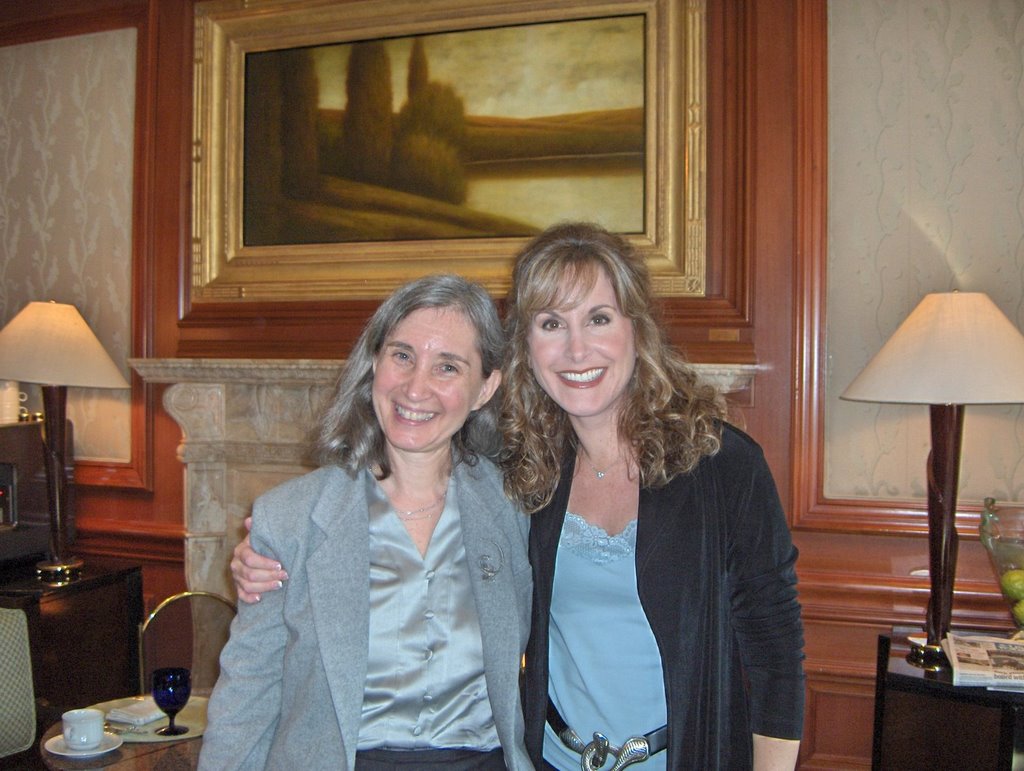
I had a wonderful talk with Jodi Benson, who provided the voice for Ariel the mermaid in one of my all-time favorite Disney movies, The Little Mermaid.   Posted by Picasa